
Hospitality & Visitor Economy Workforce Development Partnership
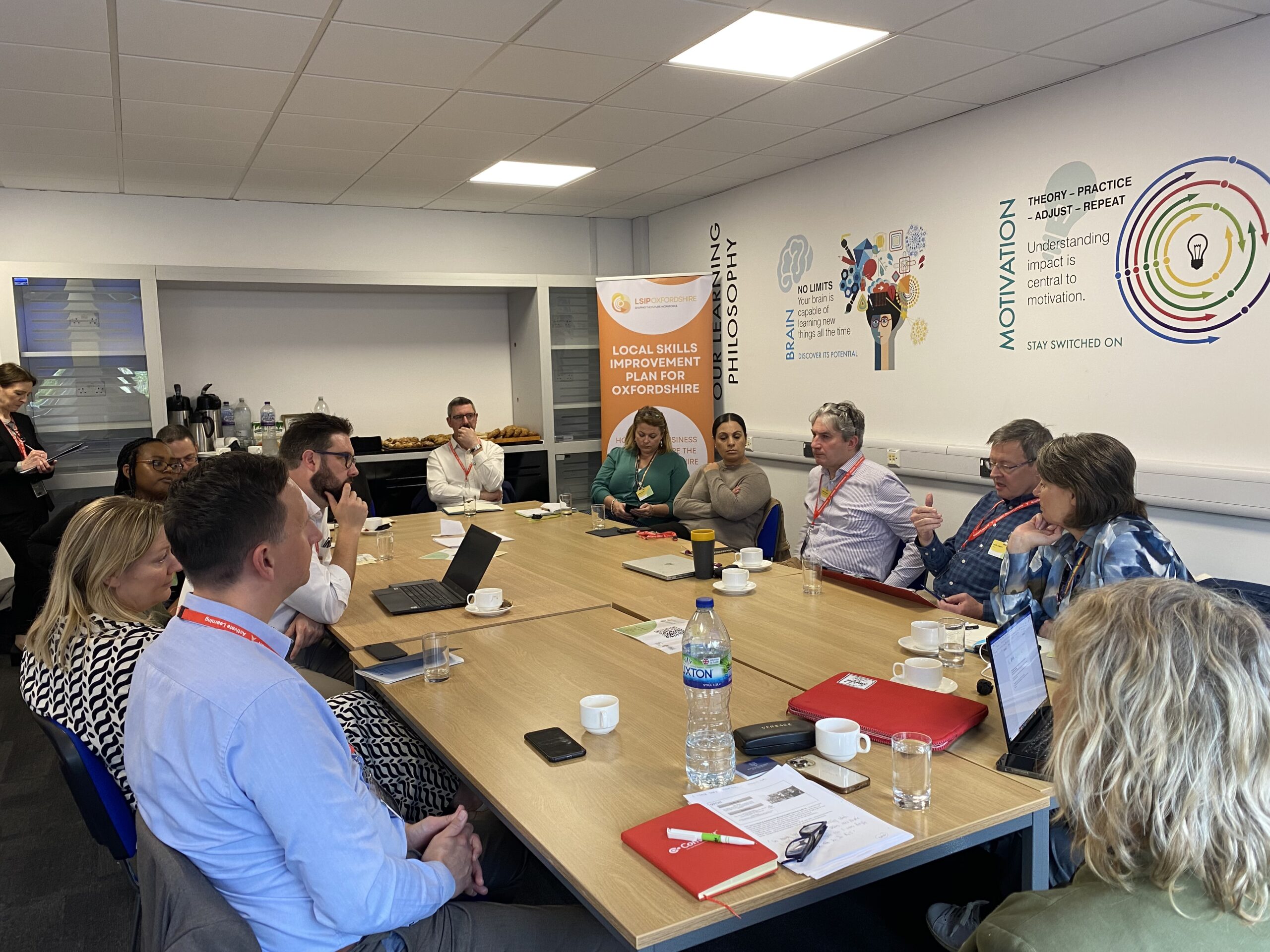
The meeting opened with a warm welcome and introductions, followed by a recap of the purpose of the Workforce Development Partnership (WDP), which continues to gain momentum across Berkshire and Oxfordshire. Attendees were encouraged to invite more employers to join the group to strengthen collaboration. Discussions revisited key skills needs, including technical and vocational skills, employability skills, and broader areas such as finance and leadership. While larger organisations have become more effective at managing skills and recruitment internally, smaller businesses require further support, particularly for entry-level roles, which remain the hardest to fill. Engaging SMEs through trade bodies and promoting the benefits of college partnerships were identified as key priorities.
An update on the hospitality sector included the launch of Missenden Abbey International Hotel and Hospitality School by Buckinghamshire New University, offering students a combination of practical and classroom-based training with paid placements. The University is working closely with UK Hospitality and exploring progression routes beyond Level 4. However, the introduction of the T-level in catering has been postponed beyond 2024, with no confirmed timeline for its rollout.
Work experience programmes were discussed, with an emphasis on developing soft skills through hands-on experience. Employers visiting schools and colleges to reinforce the importance of these skills was seen as particularly impactful. It was suggested that provider staff should spend time in hospitality establishments to gain a better understanding of industry requirements. Structured frameworks for work placements, pre-placement engagement, and gathering feedback from both students and employers were highlighted as ways to improve the effectiveness of placements.
Recruitment challenges in grounds maintenance were raised, with a shift in the role towards a more creative skillset. A decline in interest was linked to changing leisure activities among young people, and training providers noted difficulties in delivering horticulture courses due to curriculum changes and a lack of student demand.
It was noted that skills bootcamps are often more suited to those already in the industry rather than new entrants. Small businesses, in particular, face barriers such as funding, time constraints, and awareness of training opportunities. Employers were encouraged to engage with Berkshire LEP to support the case for a hospitality bootcamp and to ensure sector needs are reflected in bootcamp curricula. The LSIP progress report may include a recommendation for hospitality bootcamps in Berkshire.
Mentoring initiatives were explored, with Adviza developing a programme to match young people with employer mentors. While OxLEP has an existing mentoring scheme, engagement remains low, and its structure may need review. Ensuring initial student interest before mentoring begins was seen as key to success.
The importance of promoting the sector and sharing its values, opportunities, and career pathways was highlighted. Experience Oxfordshire was suggested as a potential platform for outreach, alongside leveraging existing networks and social media to enhance visibility.
Engagement with hard-to-reach groups was discussed, with Adviza working on an employer-led programme to support talent pipelines, particularly for entry-level roles. Employers were encouraged to participate in this initiative.
Agreed actions included: expanding engagement in the WDP through wider networks, outreach to UK Hospitality and Experience Oxfordshire, a coordinated communication campaign on opportunities within the sector, employer involvement in shaping bootcamp curricula, and further development of work experience programmes to support Level 1 students.
Screen Industries Workforce Development Partnership
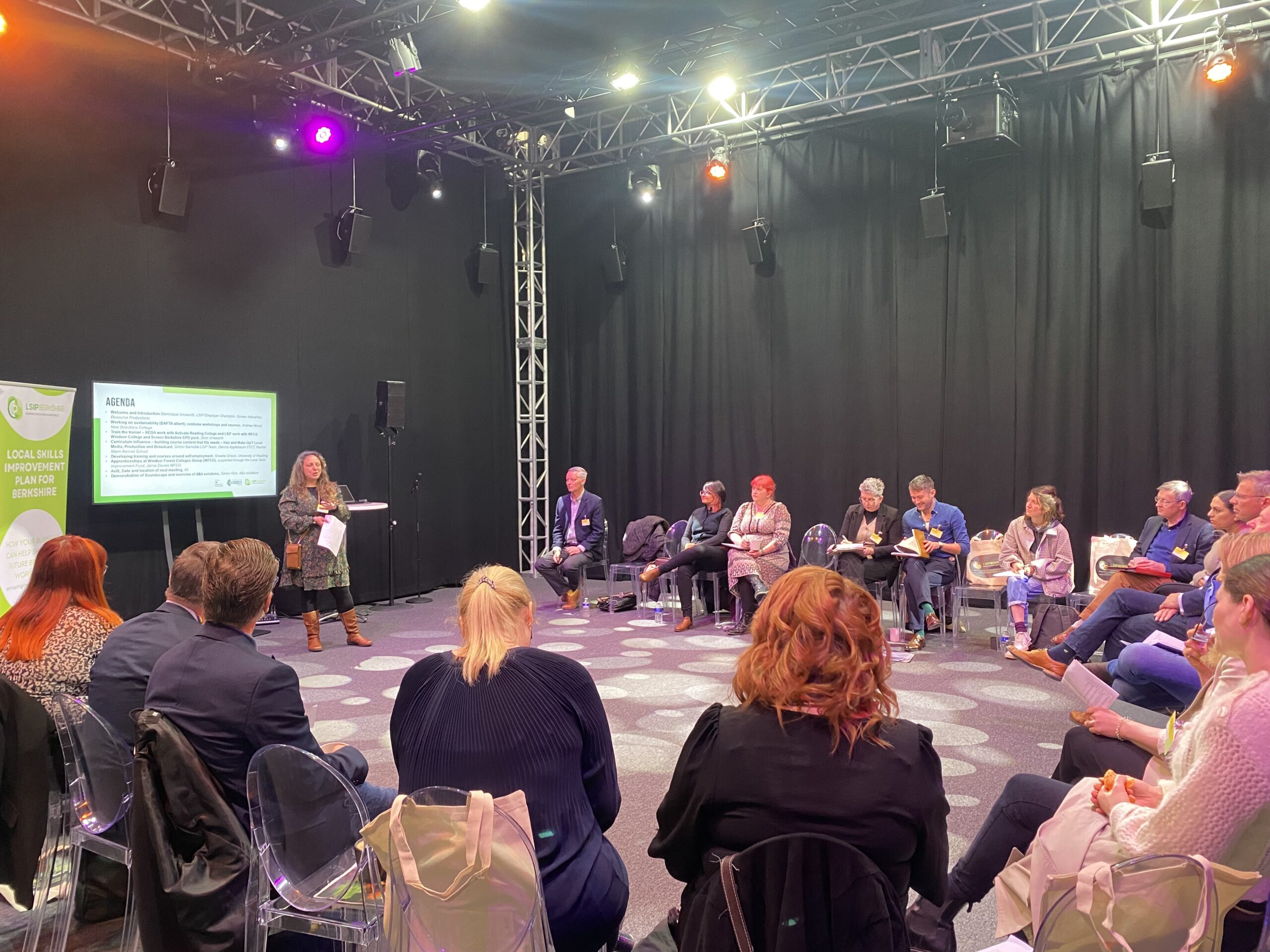
The third meeting of the Screen Industries Workforce Development Partnership saw updates on several clear actions designed to move the skills agenda for the sector in Berkshire forward. Hosted on April 23rd by d&b Solutions in Reading, we were able to experience a demonstration of their innovative ‘Soundscape’ technology, being used in venues around the world to give a unique listening experience. The meeting was built around updates on the clear actions established across the first two meetings of the group. These actions are now well established and are having a real impact on helping to meet the skills needs of the sector locally. Work includes new curriculum development to build courses that meet the up-to-date needs of the sector. This includes new courses in hair and make-up for screen and TV as well as the T level in Media, Production and Broadcast. The partnership includes input from the awarding body VTCT on hair and make-up and from Activate Learning and The Kennet School on the new T Level. Collaboration with employers is essential for this T Level to work, as it includes 45 days of work experience built into the course. There is the potential to achieve this through a range of employers coming together to offer several days of experience and students moving around them.
A ‘Train the Trainer’ programme is close to completion by Resource Productions, working with Activate Learning, Windsor Forest Colleges Group and Reading Economic and Destination Agency. The programme will allow staff in a variety of settings to be better able to explain the roles and opportunities available in the industry, which are often far broader than people realise. This includes the need to electrical and carpentry skills as well specialist approaches to human resources management, finances, and leadership & management. Reading University is undertaking research on what skills and knowledge are needed around self-employment. This is often one of the commonest forms of employment in the sector, but it is an area people need upskilling in, so they feel more confident with this way of making a living. The group is also working on developing apprenticeships that will work for the sector. Windsor Forest Colleges Group will be starting two of these in September – Production Assistant and Content Creator. Employers are being sourced to take on apprentices in these areas. The apprenticeships will be run from the colleges’ new Screen Industries Hub, partly funded by the Local Skills Improvement Fund and co-developed with ‘CUBE’ a local video and animation production company. There will also be action taking place on sustainability goals for the sector and the skills companies need in the workforce to move this forward.

Construction & Built Environment Workforce Development Partnership
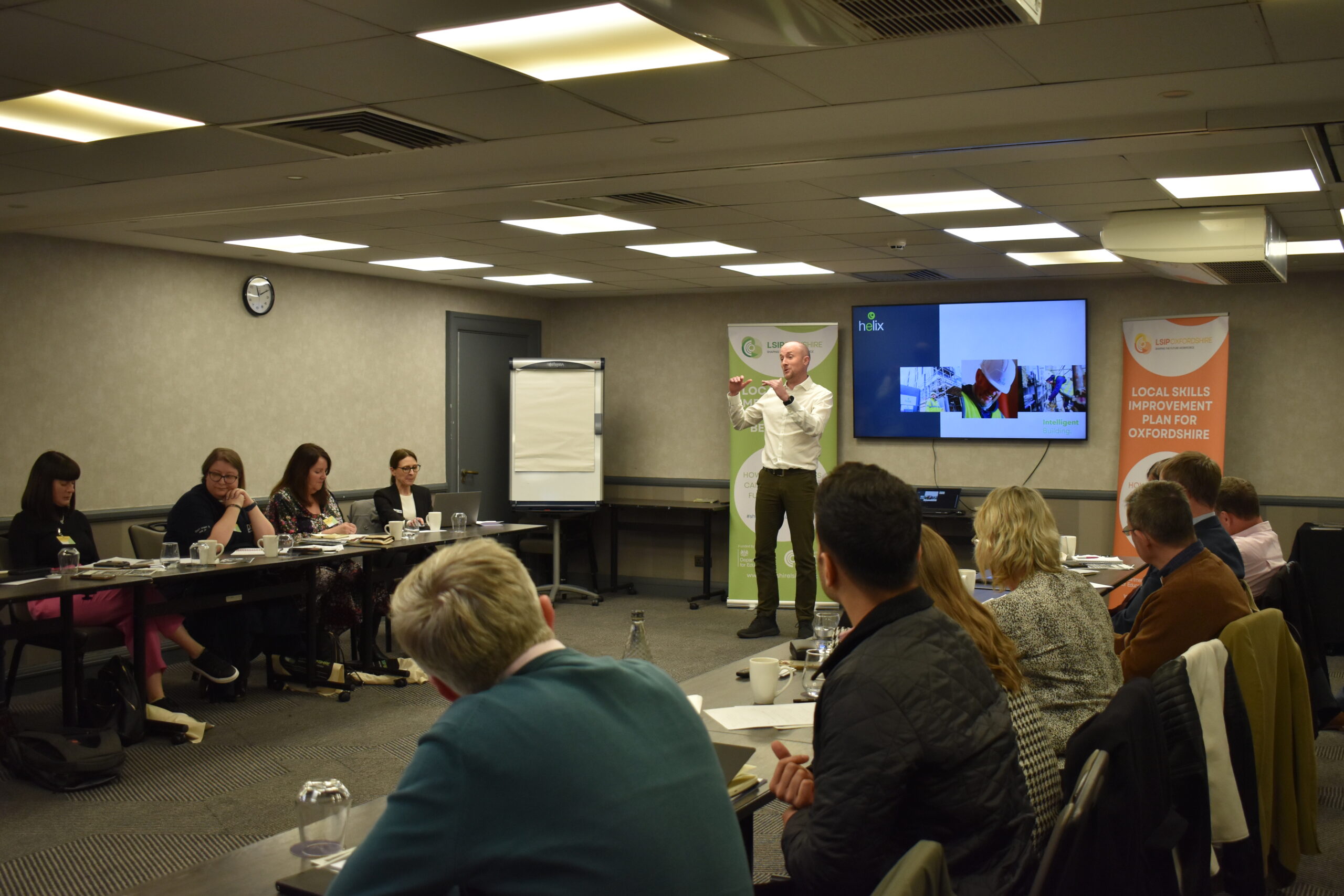
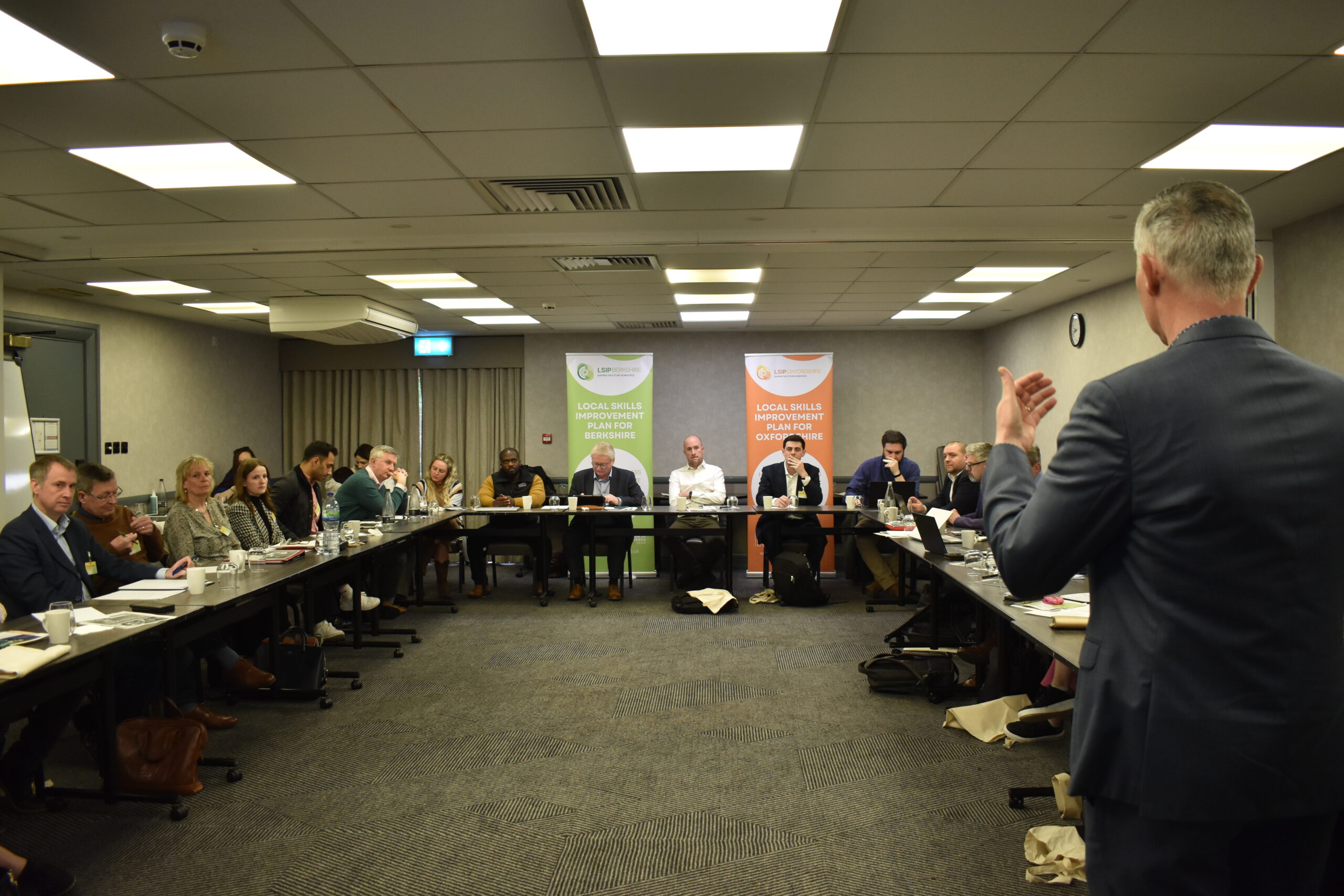
A lively and well-attended second meeting of the Construction Workforce Development Partnership saw employers, training providers, sector bodies and wider partners come together to really start to move the skills agenda for the sector forward. Held on April 17th at the DoubleTree by Hilton, Newbury the membership had presentations from the Local Skills Improvement Plan team; Ascentis – an awarding body developing new qualifications for the sector; Adviza – a charitable organisation working on a talent pipeline programme from hard to reach groups; and our Employer Champion from Helix Construction covering how we can better promote the sector.
Simon Barrable (LSIP Team) gave an update on progress since the November meeting and covered the range of new training programmes and facilities being developed by local colleges using the new Local Skills Improvement Fund monies. Clarissa Wheeler (Ascentis) explained the qualification landscape and sought input from employers in the development of new qualifications to be made available soon.
Sarah Clegg (Adviza) outlined their plans for bringing more people from harder-to-reach groups into the sector, with the support of employers and with vocational training from local educators. Lawrence Wright (Helix) outlined a range of activities he’s involved with to promote opportunities in the sector to the next generation. He also discussed plans for a promotional ‘roundtable’ event for the Thames Valley. The group committed to a number of key actions for this quarter: The concise mapping of qualifications for employers to understand what is currently offered and how they relate to opportunities/responsibilities in the workplace; the promotional roundtable event for the region; support for getting hard to reach groups into the sector.
Haulage & Logistics Workforce Development Partnership
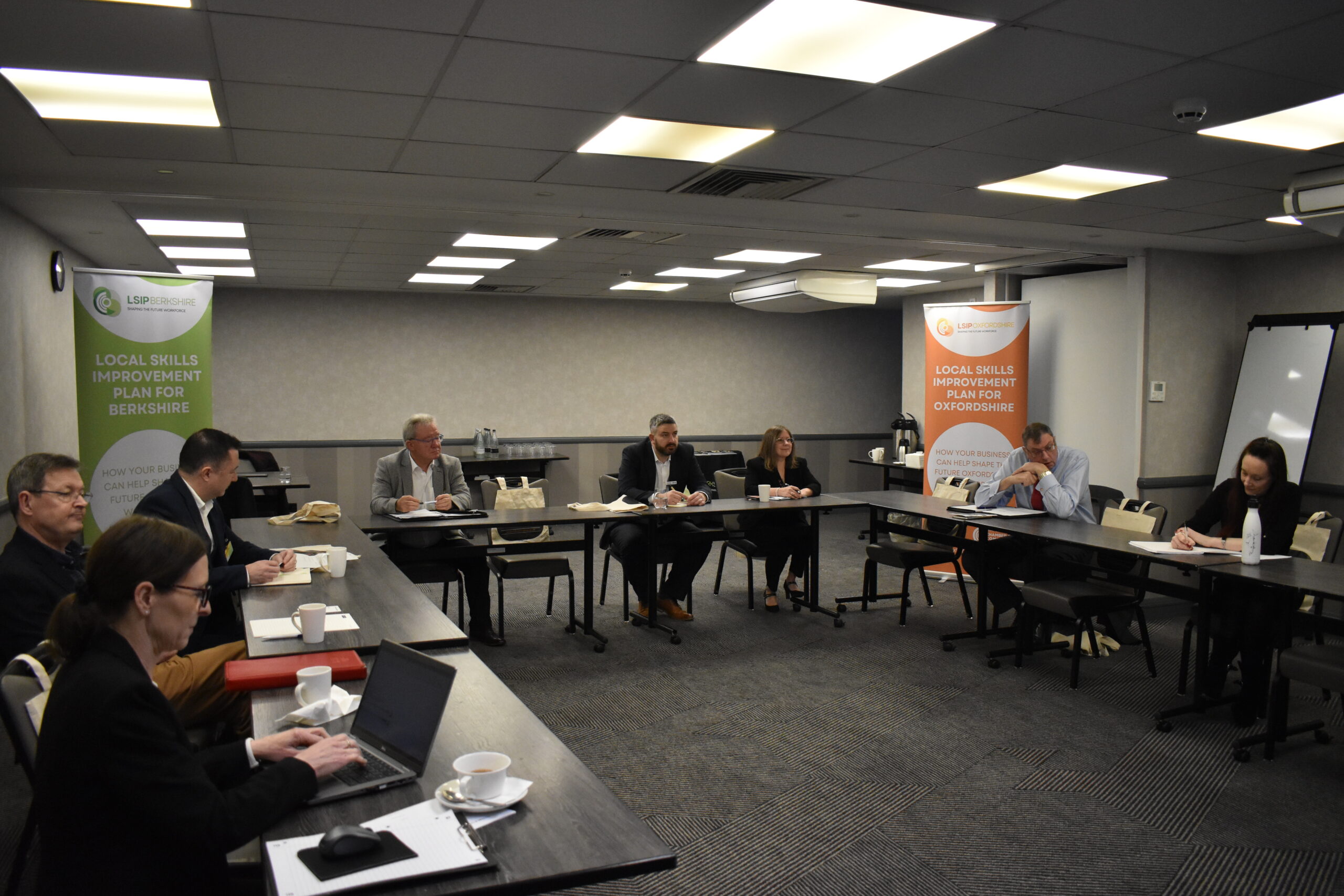
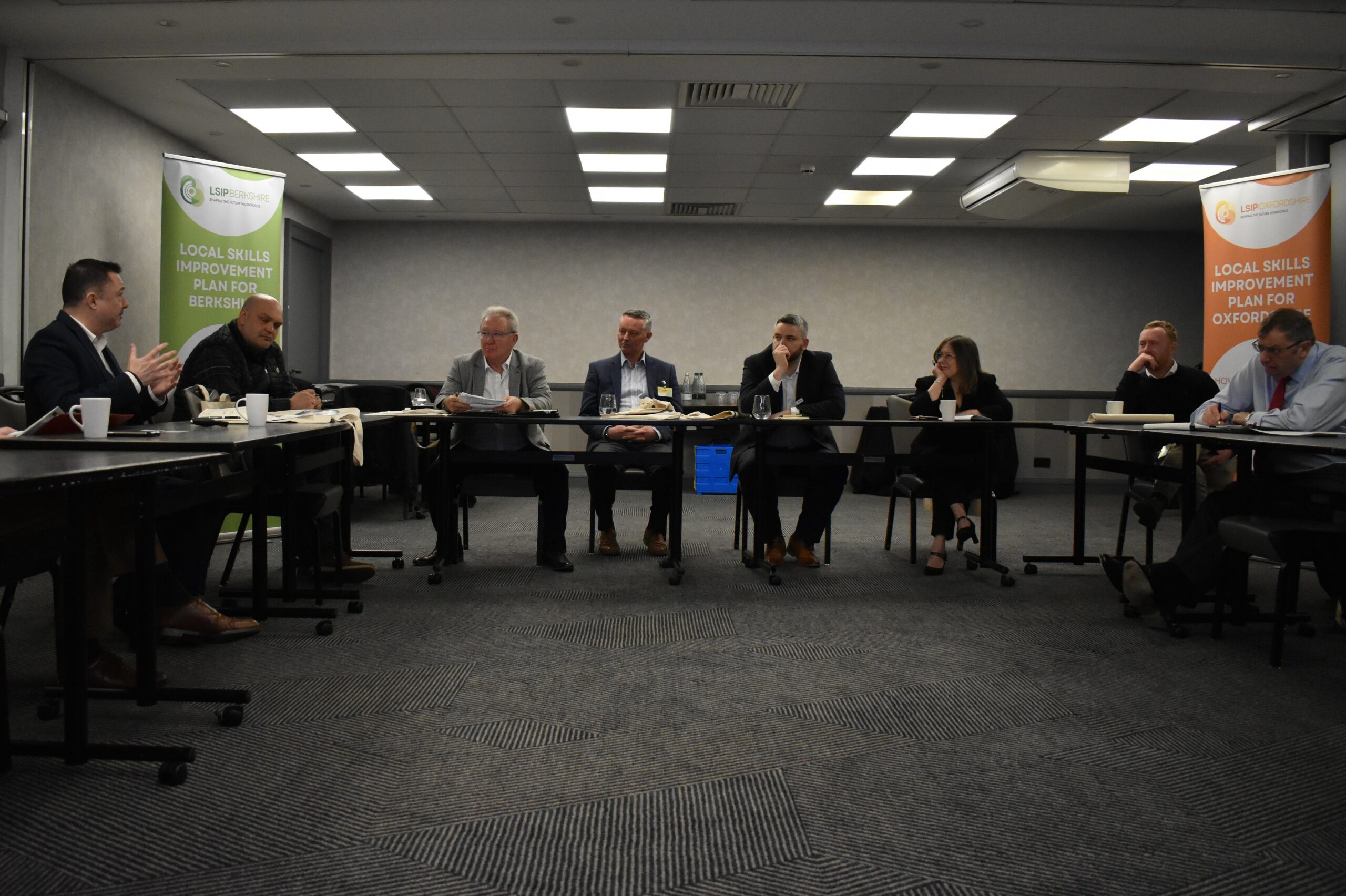
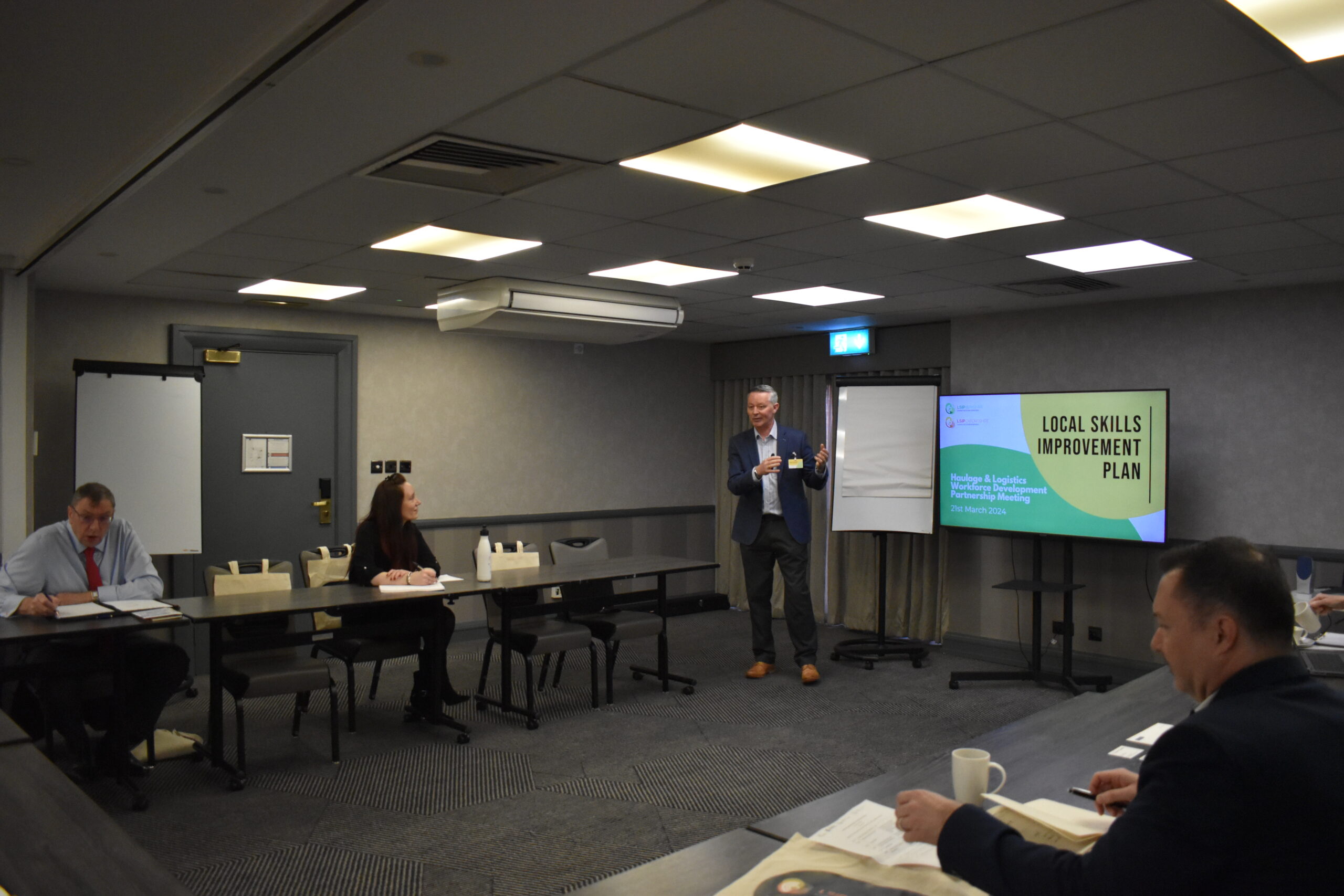
The first meeting of this Workforce Development Partnership took place on March 21st at DoubleTree by Hilton in Newbury. A range of employers and training providers met to find out more about the Local Skills Improvement Plans for Berkshire and Oxfordshire. We were lucky enough to have input from the Chartered Institute of Logistics and Transport’s Bethany Windsor who joined us remotely to update everyone on their work in promoting the breadth of careers in the sector. The Generation Logistics programme aims to bring employers and training providers together and to get young people thinking about careers in the sector. This is helped by an ambassador programme, which sees current and recently retired staff visit schools and colleges to promote the sector.
Local skills needs were presented by our Employer Champion for the sector, Richard Perriman, from Scan Global Logistics. He also emphasised the importance of positive ambassadors for the sector promoting career opportunities, as well as the need to make sure teachers were aware of the latest developments in the sector. He emphasised that good careers can be built in the sector and that there are great progression opportunities within it. People can rise high in the sector with the right work ethic and the determination and resilience to succeed. These kinds of ‘employability’ skills are vital, as are good basic IT skills. There were also wider discussions around attracting more level 1 learners into the sector and the opportunities they would then have to progress. As well as growing apprenticeship numbers and looking at a local promotional event, with employer, educator, and student presence, to better promote opportunities.
Key actions to take forward included: The sharing of resources from the Chartered Institute of Logistics and Transport (CILT) with Careers Organisations for use with schools and colleges; working with Generation Logistics to get more sector ambassadors in front of students; working on a pilot programme of work placements with key employers and providers; a joint LSIP/CILT event to be run in the Autumn to bring employer, provider and learner voices together.

Support with employee health and disability
In 2021 DWP published the result of the Health is Everyone’s Business consultation. Employers told us they found the amount of information to help them manage employee health and disability was too vast; too fragmented and not navigable.
As a result we have created the SEHD tool on gov.uk. This has been developed with trusted information from across Government and in partnership with Arms Length Bodies (such as the Health and Safety Executive) to improve support for employers on health and disability at work.

Teach Your Trade
If you want to shape the future of your industry, why not use your skills, knowledge and experience to train upcoming talent at your local college?
You can join as a part-time trainer alongside your day job or work full-time and become a qualified teacher/trainer with a secure future.

Green Skills Academy
Windsor Forest College Group are forming a Green Skills Academy delivering courses in the areas of Green Skills Construction, Electric Vehicle Maintenance and Agricultural Technology to help businesses grow and keep apace of the technological changes and sustainable practices being introduced to help reduce carbon emissions. They were chosen to deliver a range of courses that focus on sustainable technology and practices to improve and upskill people in key sectors across Berkshire.

Discover Robotics
University Centre Newbury and The Henley College have partnered together to provide fully funded courses on robotics. These innovative, practical and fully-funded courses teach delegates how to set up and program industrial robots on a range of operating systems, as well as how to maintain and look after industrial robot cells to help minimise wear and reduce downtime.